Philosophy
My work draws inspiration from the irregular, organic beauty of the natural world and serves as a response to the accelerating digitalization of contemporary society. In an era where artificial perfection and mass production have become dominant forces, my practice offers a counterpoint: a return to materiality, process, and the quiet rhythms of nature. Rooted in a nature based aesthetic paradigm, my work deliberately rejects the rigid ideals of symmetry, flawlessness, and uniformity often celebrated in Western culture. Instead, it embraces imperfection, asymmetry, and the marks of time, inviting a deeper engagement with the physical and sensory aspects of human experience.
The choice to work with forraged clay is an intentional one. Unlike commercially processed materials, wild clay carries the unpredictability of the land itself. It is shaped by geological forces, seasonal shifts, and the subtle interactions between earth, water, and air. It is both resilient and vulnerable, bearing the traces of its origins while remaining open to transformation. The firing process further enhances these qualities, revealing surfaces that are layered, textured, and rich with variation. These pieces do not strive for a fixed notion of beauty but instead reflect the fluid, evolving nature of the world around us.
Central to my practice is the belief that nature is not just an inspiration but a collaborator. My process is informed by an ongoing dialogue with the environment, where observation, intuition, and material exploration guide the work’s evolution. I see this engagement with natural forms and rhythms as an act of reverence. An acknowledgment of the wisdom embedded in the landscapes that shape us. The more we observe nature, the more we are reminded of our own humanity: that we are not separate from the earth but intrinsically connected to it.
By slowing down, noticing subtle details, and embracing imperfection, my work encourages a contemplative state. It invites viewers to engage with an alternative aesthetic sensibility. One that values process over product, subtlety over spectacle, and presence over distraction. In doing so, it challenges contemporary notions of beauty and offers a space for reflection, connection, and deeper awareness of the natural world.
Biography
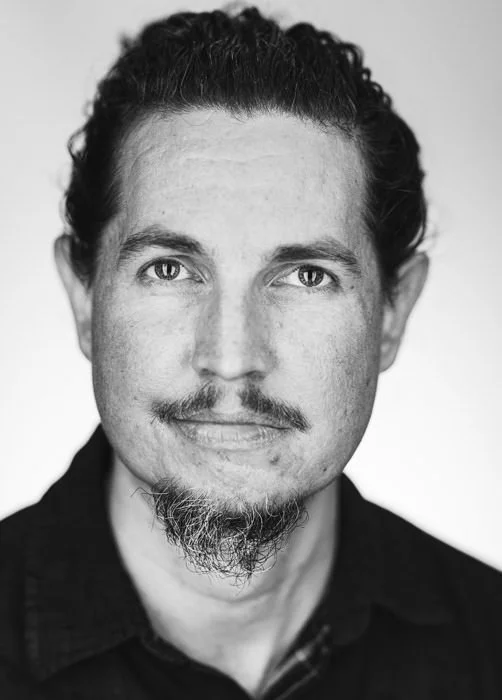
Seth Charles is a studio artist with a specialization in ceramics, encompassing both sculptural and functional work. He currently teaches ceramics, 2-D design, and 3-D design. Prior to his appointment at the University of Wisconsin Stevens Point in 2024, Seth was the Executive Director of the Mendocino Art Center in Northern California.
Seth holds a Bachelor of Fine Arts degree from The University of North Florida and a Master of Fine Arts degree from Central Washington University. His teaching portfolio includes positions at State College of Florida and Central Washington University, as well as leading workshops and lectures across the United States. He has completed artist residencies at The Clay Studio of Missoula and the Morean Center for Clay.
Seth’s work has been featured in numerous national and international exhibitions and is included in both public and private collections including University of North Carolina, Museum of Contemporary Art Jacksonville, Missouri Western State University, and Moses Lake Art Museum. He has made significant contributions to the ceramics community through the construction of wood-fired kilns at educational institutions and clay centers throughout the United States.